Water Softeners
Hard water contains dissolved calcium and magnesium that can leave white mineral deposits on faucets, fixtures, and shower doors. These minerals can also contribute to scale buildup inside plumbing, water heaters, and household appliances. Hard water makes soaps and shampoos less effective and can leave soap residue on dishes, laundry, and bathroom surfaces. A properly selected water softener reduces these hardness minerals. Colored staining, metallic tastes, or sulfur odors may indicate additional water-quality concerns that require separate evaluation and treatment.
How a Water Softener Works
Water softeners use a specialized media tank filled with resin beads coated with sodium ions. As hard water flows through the tank, the beads attract and capture calcium and magnesium, replacing them with sodium (or potassium) ions. This process softens the water before it enters your home.
During regeneration, a brine solution flows through the resin tank, flushing out accumulated hardness minerals and restoring the resin’s ability to soften water. Once the cycle is complete, the softener returns to normal service.
Regeneration Controls and System Types
Metered water softeners track the amount of water used and initiate regeneration based on the system’s programmed capacity and water hardness. This helps match regeneration frequency to household demand and can reduce unnecessary salt and water use compared with a fixed schedule. Some systems also include a maximum interval between regeneration cycles.
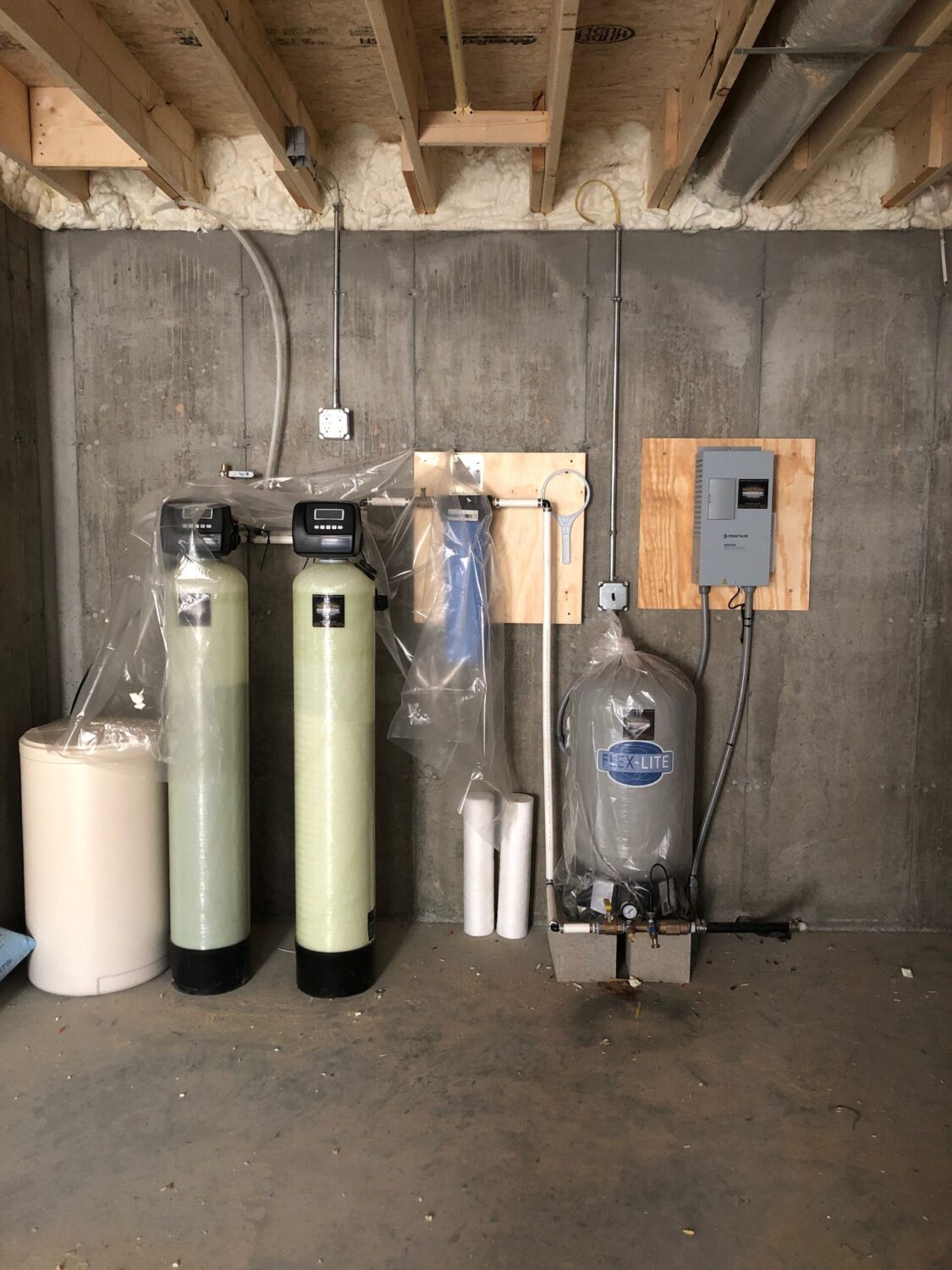
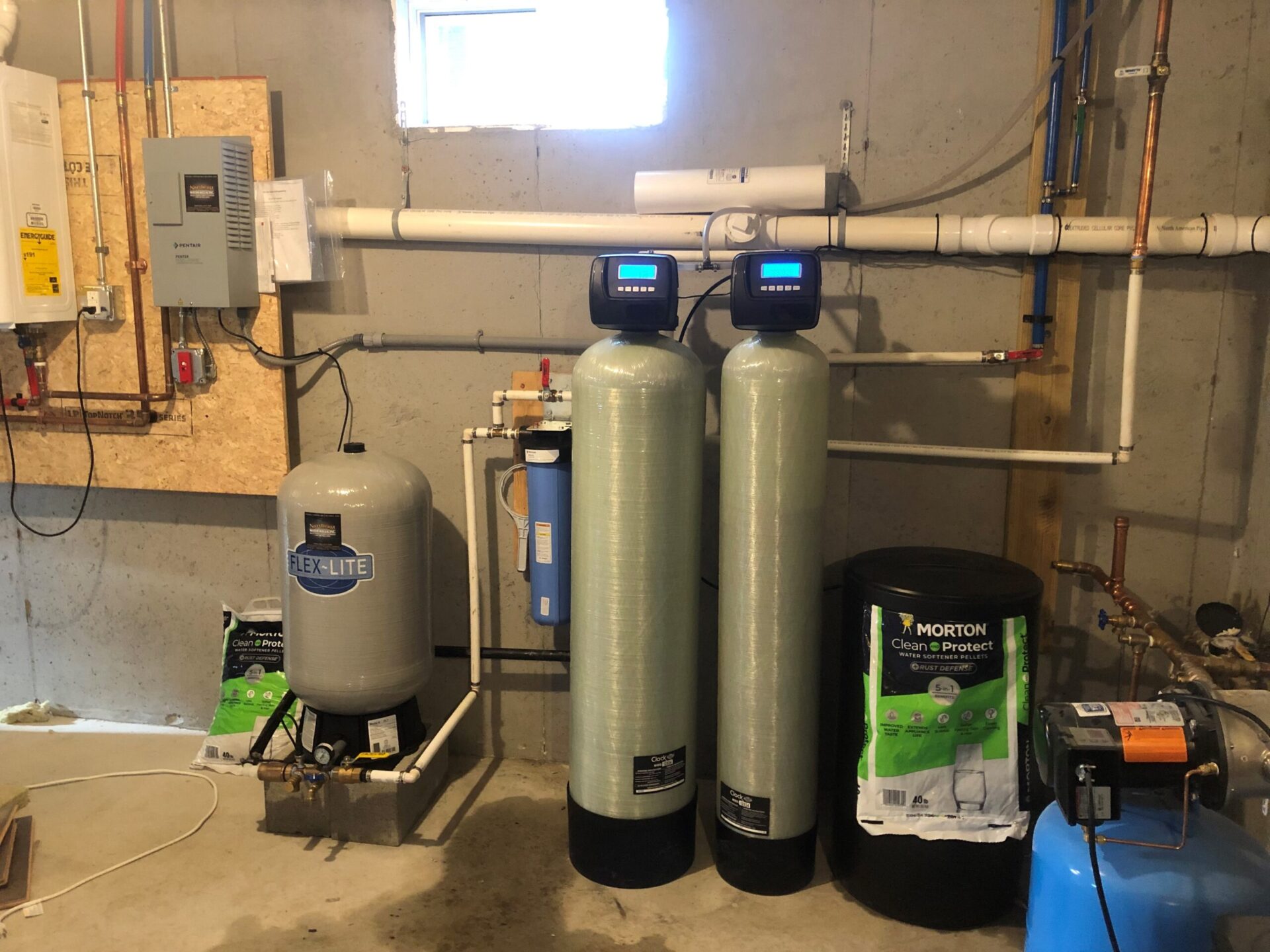
We select the softener’s capacity, flow rate, and controls for your water conditions and usage. Where continuous softened water is needed, a twin-tank system allows one tank to remain in service while the other regenerates.
Proper sizing and programming help the system deliver consistent softened water while using salt and water efficiently.
Customized Water Treatment Solutions
Every home’s water is different. Northeast Water Wells reviews your water conditions, existing equipment, and household needs to recommend appropriate treatment. We can review available laboratory results, check hardness, and arrange additional testing where needed.
Based on those findings, we select the type and size of equipment for your application. If your water has concerns beyond hardness, additional treatment may include:
- Iron, manganese, and hydrogen sulfide filtration.
- Whole-house filtration and treatment.
- Point-of-use reverse osmosis for drinking water, where appropriate.
Get Expert Water Softening Solutions
Whether you need a new softener or help with an existing system, our team can evaluate your equipment and explain your options.
Call 1-800-562-WELL (9355) or contact Northeast Water Wells to discuss water softening installation or service in Southern New Hampshire and Central Massachusetts.