Acidic Well Water Treatment in Southern NH & Central MA
Acidic well water can contribute to corrosion of metal plumbing and water-system components. Blue-green staining on fixtures, metallic tastes, or recurring plumbing leaks may be signs that your water needs evaluation.
Northeast Water Wells installs and services acid neutralizers throughout Southern New Hampshire and Central Massachusetts. We review your water conditions and existing system to recommend an appropriate approach to pH correction.
Understanding Low pH & Corrosion
pH measures how acidic or alkaline water is. A pH of 7 is neutral; readings below 7 indicate acidic water.
Low pH can contribute to the corrosion of copper piping, brass fittings, and other metal components. Blue-green stains may result from copper released into the water as plumbing corrodes.
However, pH is only one factor affecting corrosion. Water chemistry, plumbing materials, and operating conditions also matter. Staining or leaks alone do not establish the cause, so testing and system evaluation come first.
How a Calcite Acid Neutralizer Works
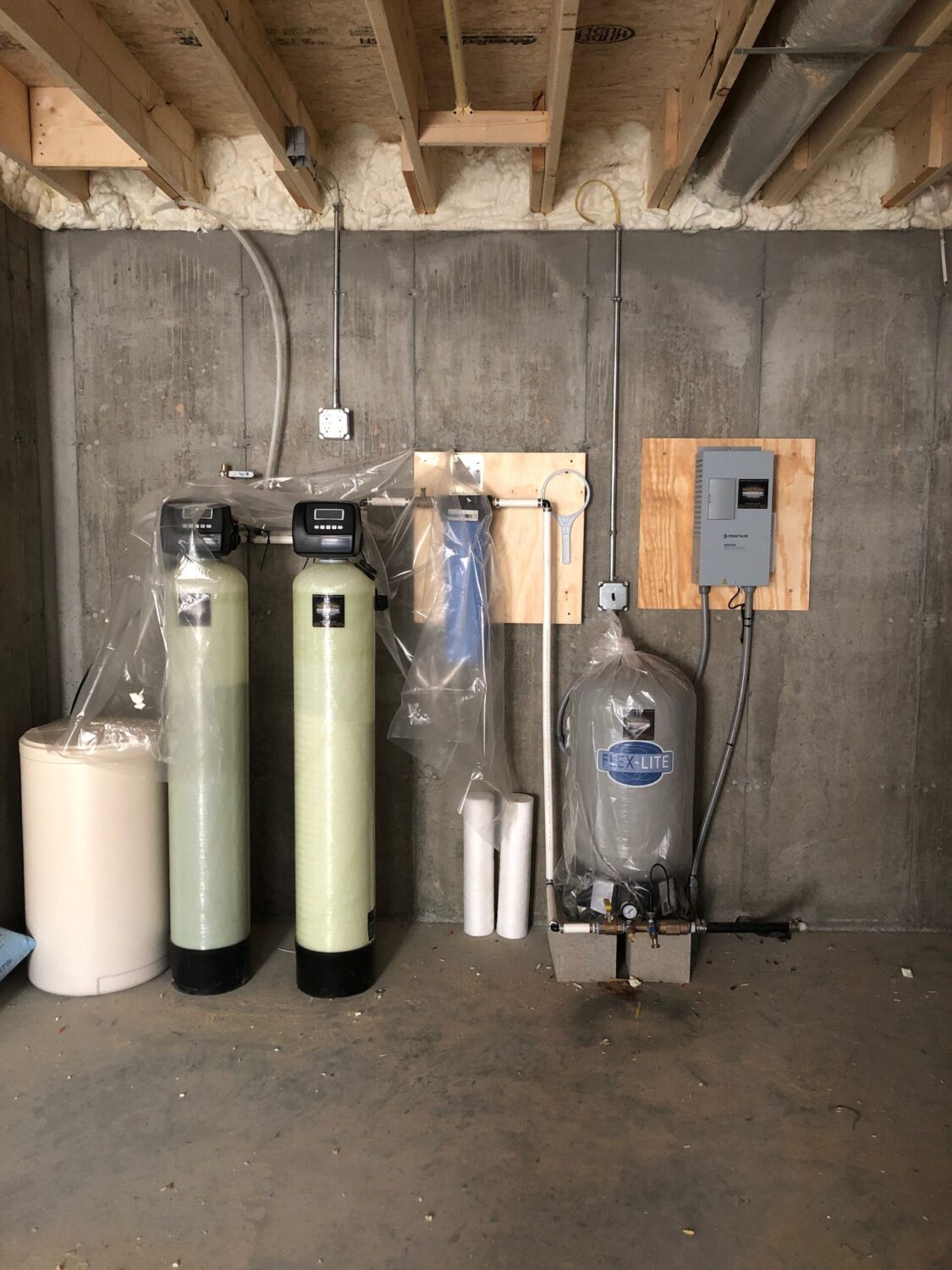
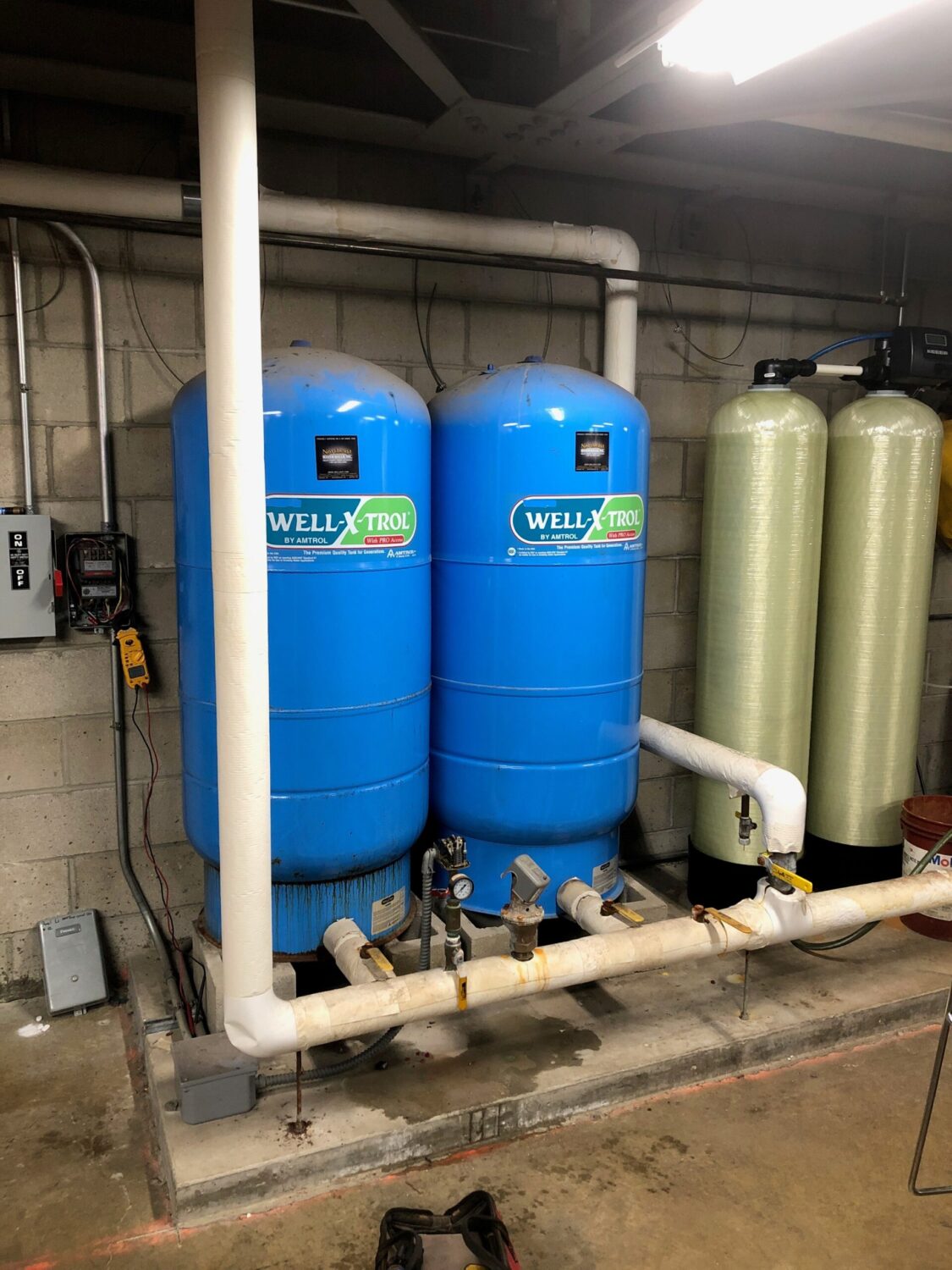
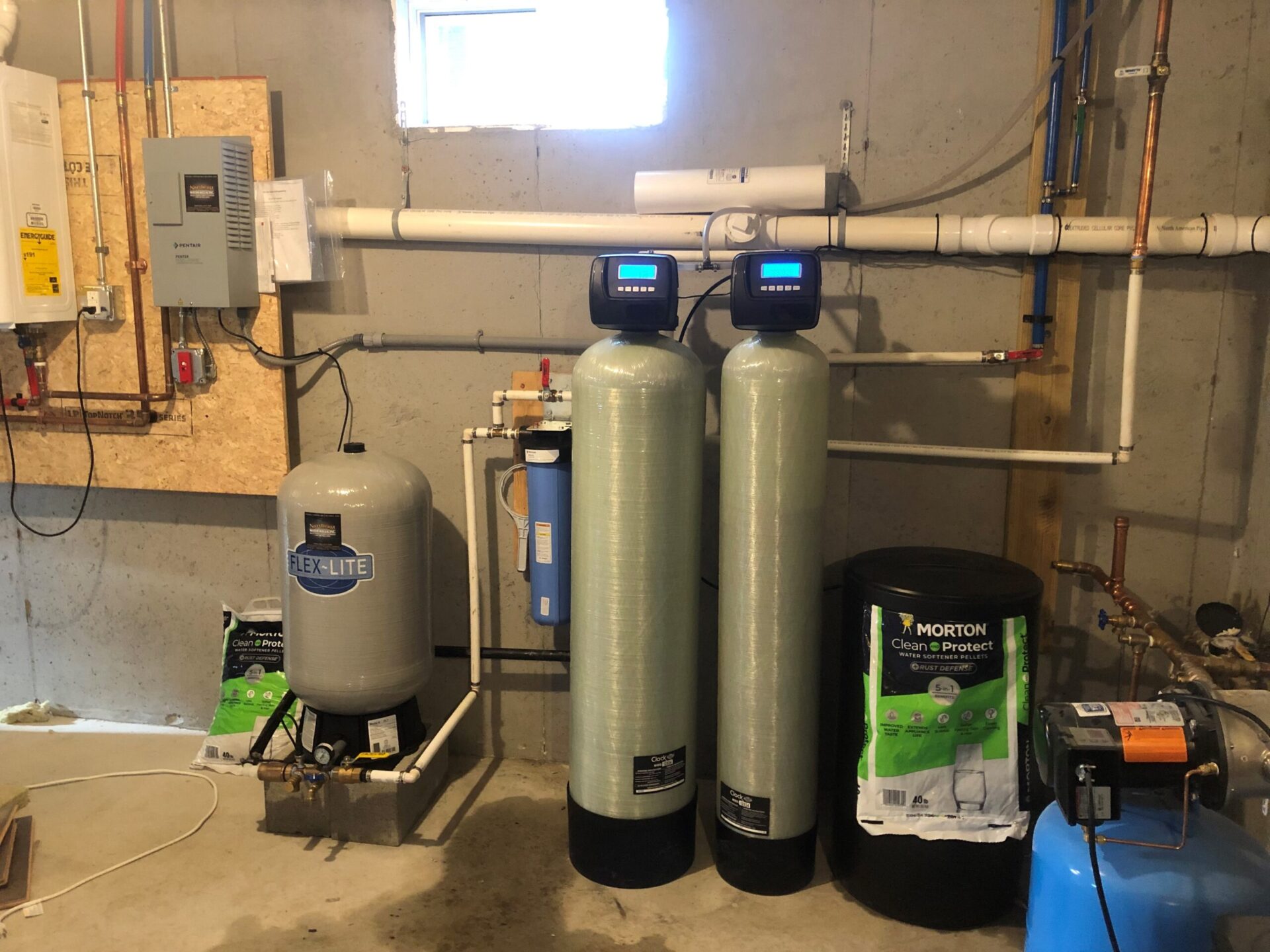
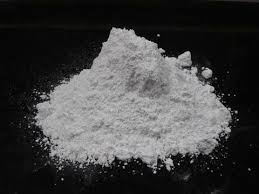
Calcite neutralizers are our most commonly used treatment for acidic well water. These systems contain a calcium carbonate mineral media that gradually dissolves as acidic water passes through it, raising the water’s pH.
We select the tank size and operating setup for your water conditions and the amount of water your property uses. Proper sizing helps provide the contact time needed for effective treatment.
Where a backwashing system is used, automatic cleaning cycles help maintain the media bed and flush accumulated material from the tank.
Testing & System Selection
We review the incoming pH, hardness, and other relevant water characteristics before recommending equipment. We also consider household demand, available water pressure, and the well system’s ability to support the proposed treatment.
Calcite is suitable for many of the applications we encounter. More severe acidity or challenging water conditions may call for a different media or another pH correction method. We evaluate those needs individually and explain the recommended approach.
After installation, checking the treated water helps confirm that the system is performing as intended.
Will an Acid Neutralizer Make My Water Harder?
Calcite treatment adds calcium to the water as the media dissolves, which increases hardness. Whether additional softening is needed depends on the incoming water and the resulting treated-water hardness.
A neutralizer and a water softener perform different jobs. Where both are appropriate, we design them to work together as part of the overall treatment system.
Learn more about our water softening systems and service.
Media Replenishment & Ongoing Service
The mineral media is gradually consumed during normal operation and needs periodic replenishment. How quickly it is used depends on water chemistry and water consumption.
Service may include checking the media level, testing untreated and treated water, inspecting the control valve, and confirming that backwash settings remain appropriate for the installation.
If staining returns or your existing neutralizer is no longer correcting the pH effectively, we can evaluate the equipment and recommend service or adjustments.
Existing Plumbing & Water-System Components
An acid neutralizer treats water as it passes through the equipment. Components located before the neutralizer remain exposed to untreated water, and treatment does not repair damage that has already occurred.
We can review accessible water-system components and discuss whether their condition or materials warrant further attention. Existing plumbing leaks or suspected corrosion may also require evaluation by a plumber.
Request Acid Neutralizer Installation or Service
Whether you have a new low-pH test result or an existing neutralizer that needs attention, Northeast Water Wells can help you understand the next step.
Call 1-800-562-WELL (9355) or contact us to discuss pH correction, acid neutralizer installation, or service in Southern New Hampshire and Central Massachusetts.